
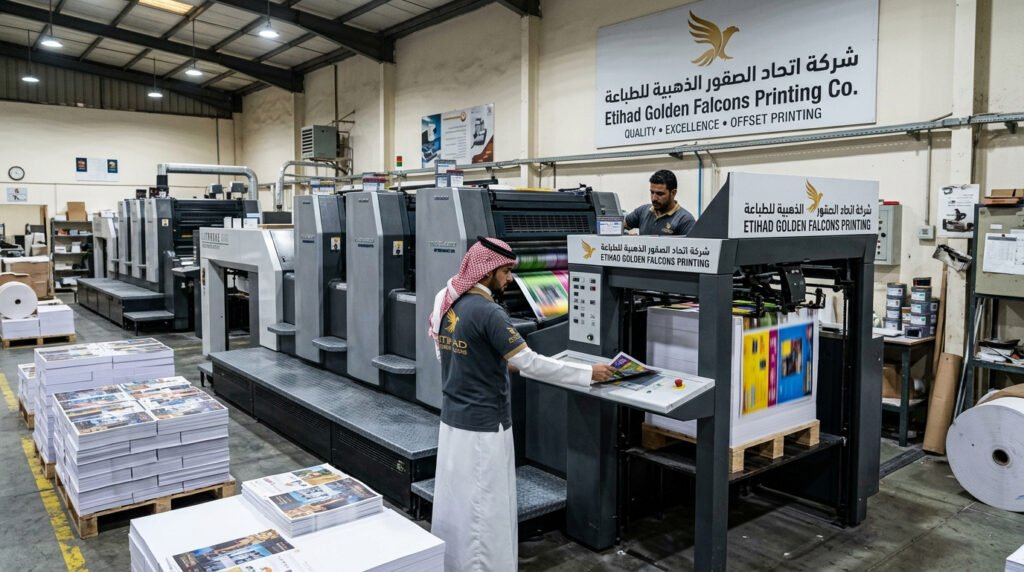
Offset printing is the production method built for one specific problem: making thousands of copies of brochures, business cards, company profiles, or product packaging that are all exactly the same in terms of color, finish, and quality, whether it’s copy number one or copy number five thousand.
For your business, offset printing is exactly what you need for marketing materials, investor communication, client catalogues, flags, and campaign posters. That’s why getting the detail wrong isn’t a small mistake; it can damage the brand image you’ve spent years building.
Businesses that get offset printing right don’t just save on cost per unit; they present their brand correctly everywhere it shows up. But if you get it wrong, the cost shows up later in the form of reprints, mismatched batches, and a brand that looks less controlled the more of it gets printed.
In this guide, we break down exactly what offset printing does for your business, when it makes more sense than digital, what actually drives the cost, and what to look for when you’re choosing a printing services company.
What Are the Main Types of Offset Printing Available in Riyadh?
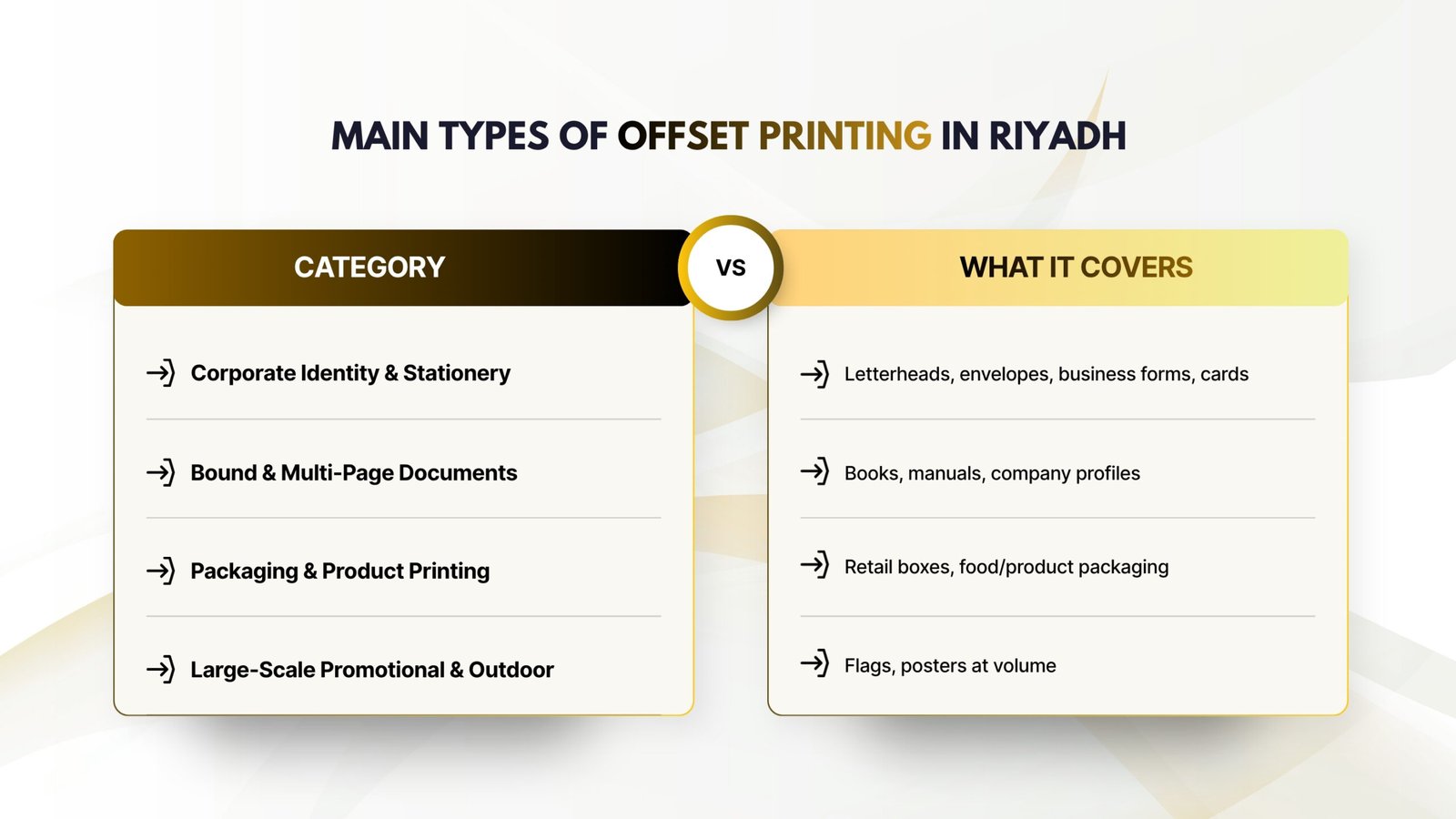
| Category | What It Covers |
| Corporate Identity & Stationery | Letterheads, envelopes, business forms, cards |
| Bound & Multi-Page Documents | Books, manuals, company profiles |
| Packaging & Product Printing | Retail boxes, food/product packaging |
| Large-Scale Promotional & Outdoor | Flags, posters at volume |
Corporate Identity and Stationery Printing

Letterheads, envelopes, business forms, branded correspondence materials, and official stationery used across daily operations, all covered under professional printing services in Riyadh. This is the print that represents an organisation in formal communication, proposals, contracts, and official letters. Every piece must look identical whether it is used in the Riyadh head office or a regional branch.
Business Cards
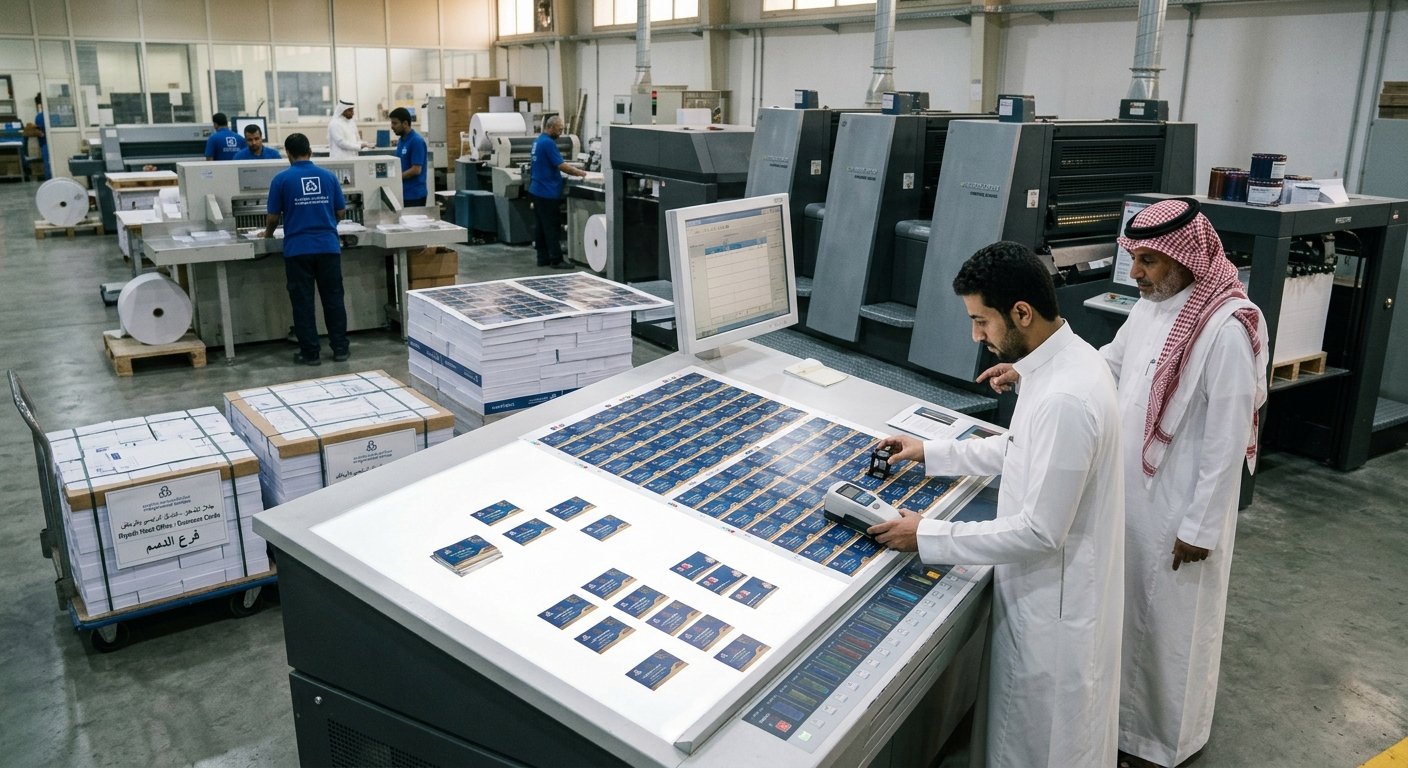
Offset printing business cards for large corporate orders, where hundreds or thousands of cards need to match exactly across a full team or across multiple departments, is a standard application. At volume, offset delivers colour and finish consistency that digital cannot sustain across the same quantity.
Books, Booklets and Company Profiles
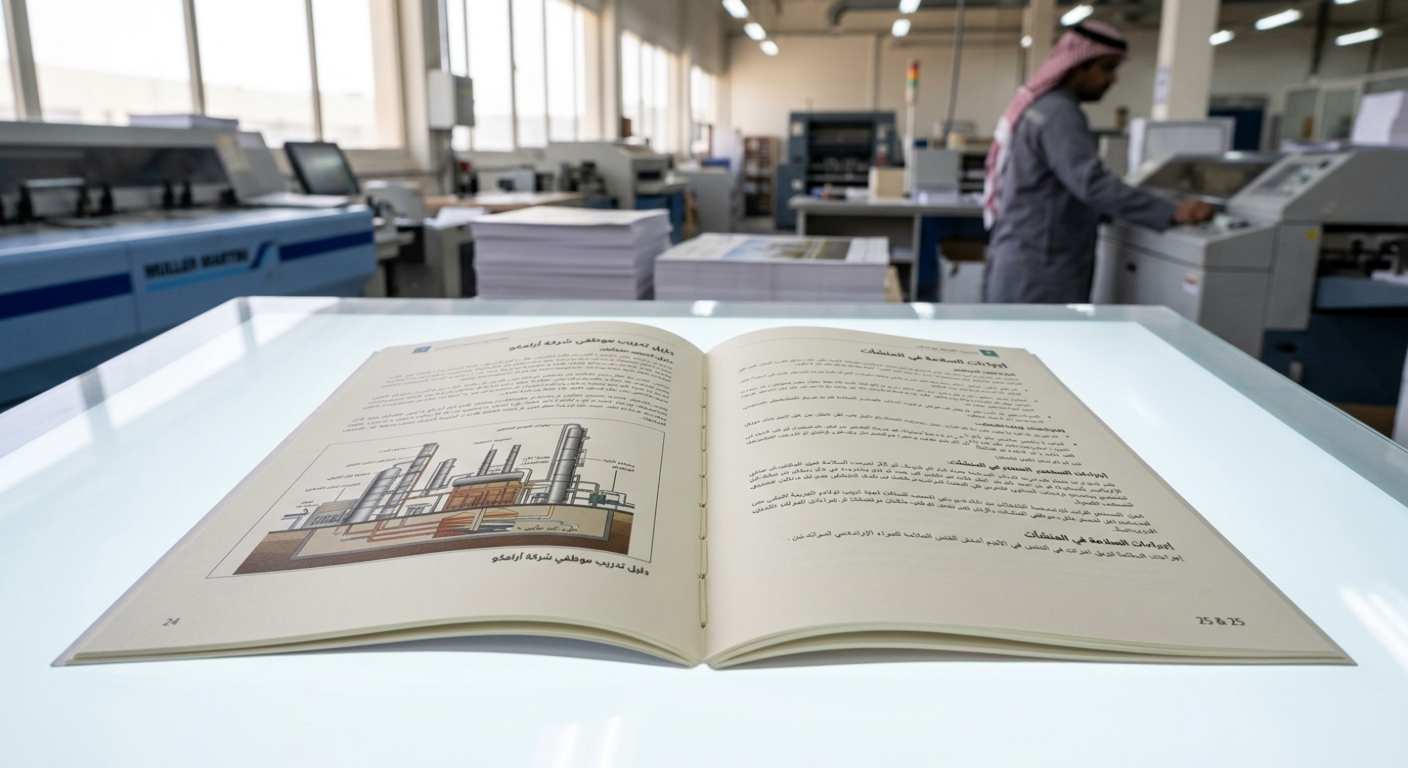
Booklet printing, along with books, training manuals, company profiles, and institutional publications, requires stable alignment, consistent colour across every page, and clean, durable binding. These materials often represent the organisation in formal or semi-permanent contexts, a company profile left with a client, a training manual distributed across a department, a publication produced for an event or institution.
Bound and Multi-page Document Printing
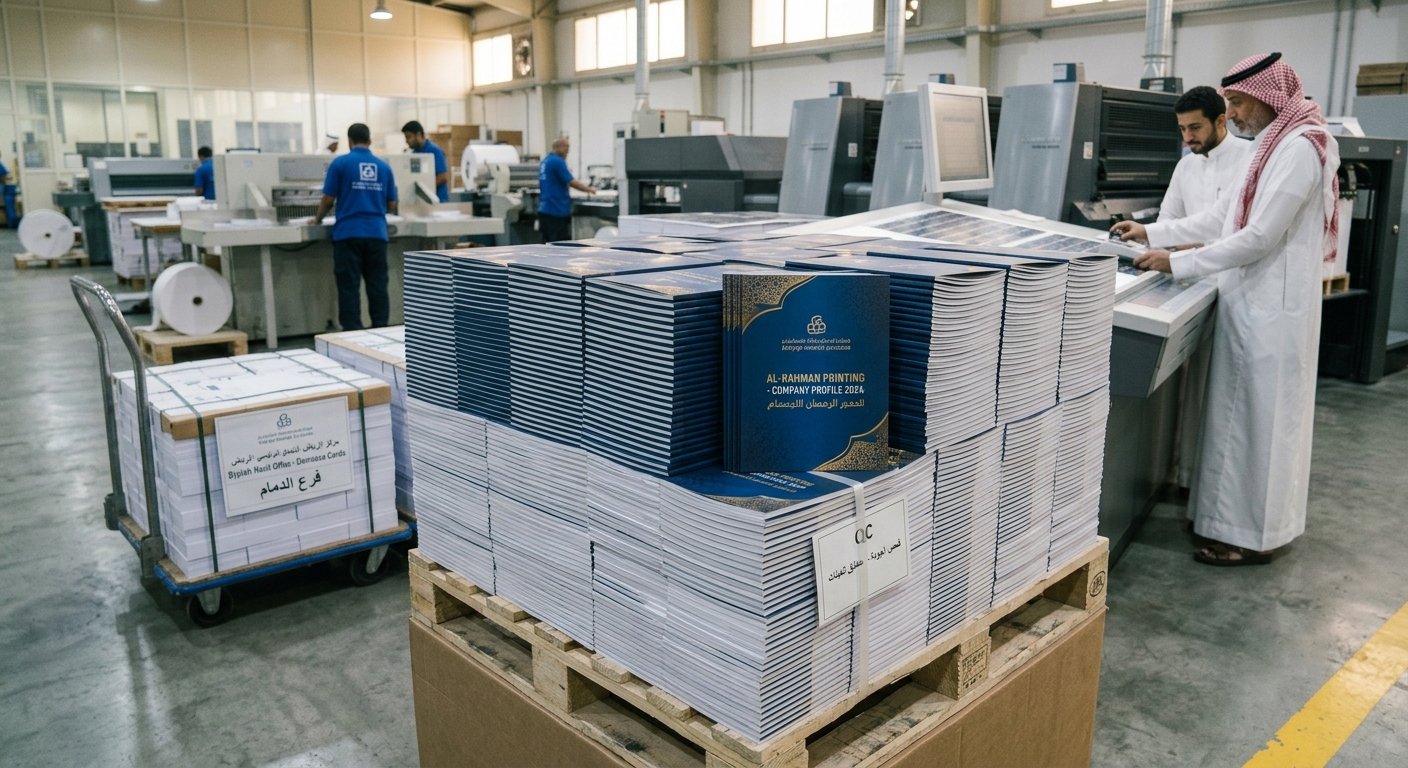
Offset printing for bound documents at this level ensures that every copy in the run is identical, and that the physical quality of the material matches the content it carries.
Packaging and Product Printing
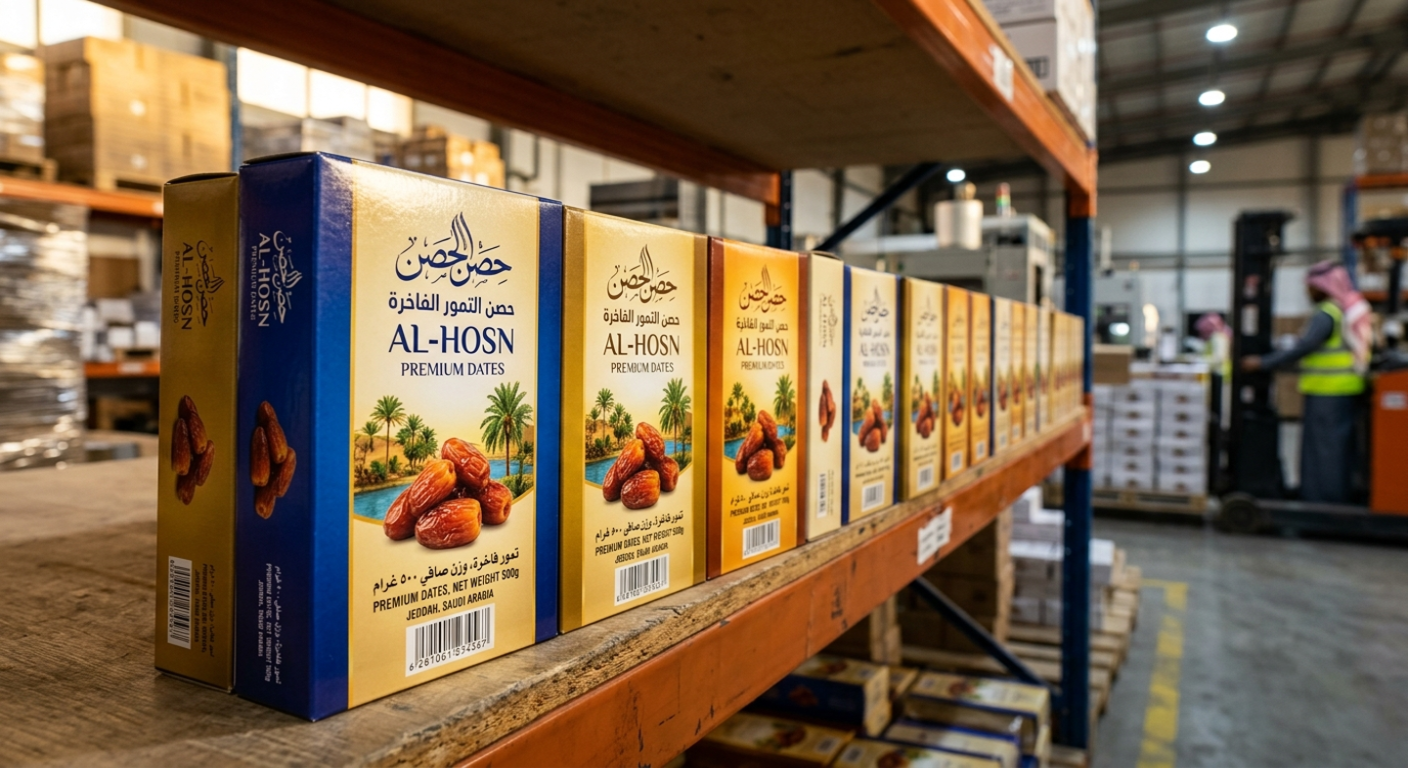
Retail boxes, food packaging, commercial product packaging, or promotional products printing: any print application where the same unit is produced in large volumes and displayed side by side on shelves or in distribution chains. Colour stability across packaging print runs is not a preference. It is a commercial requirement.
Large-scale Promotional and Outdoor Printing

Flag printing for corporate events, government campaigns, institutional use, and branded activations where multiple units are displayed simultaneously in the same space. When ten flags from the same campaign are mounted side by side in a public area, they need to be indistinguishable from each other. Offset printing delivers that uniformity at a scale and cost-per-unit that digital cannot match.
Large-Volume Posters
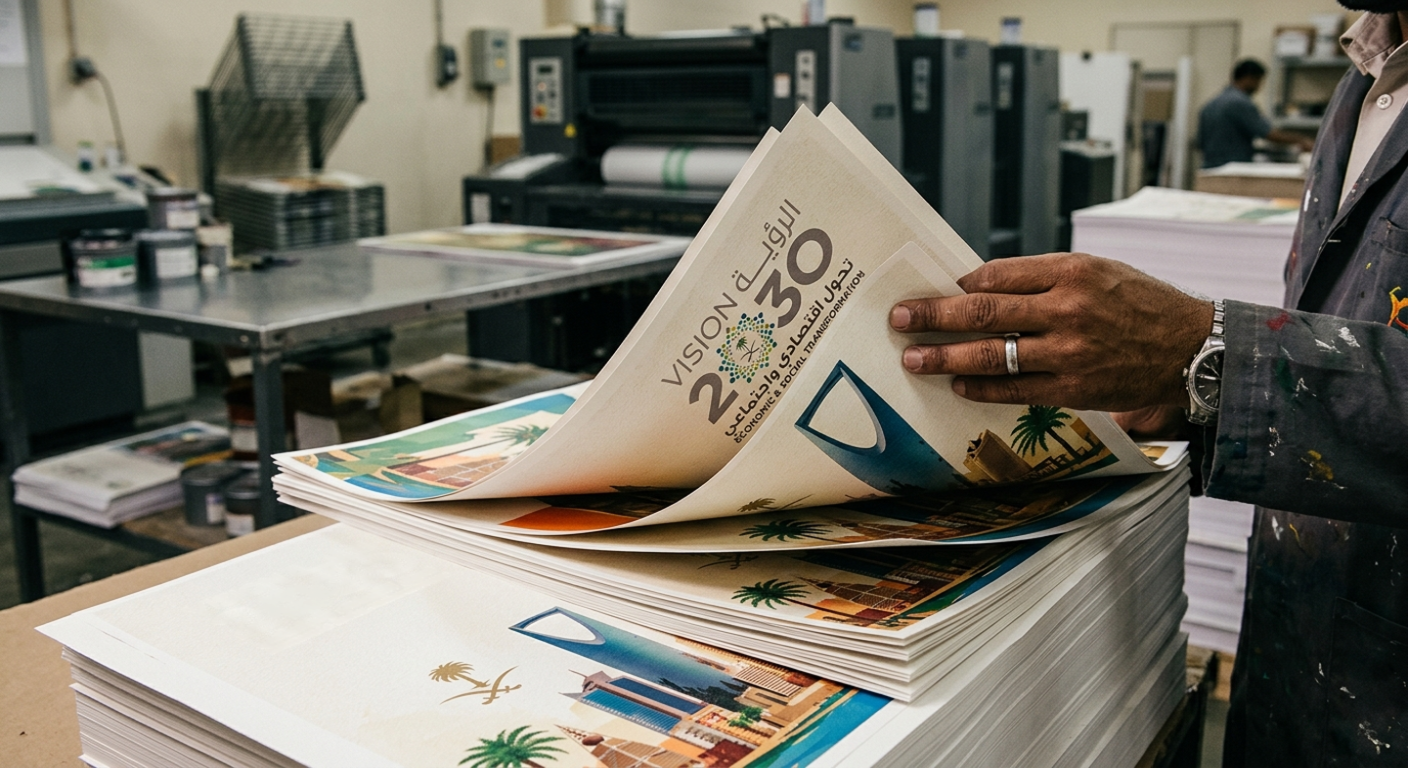
Offset poster printing at large volumes, for public campaigns, event distribution, or multi-location promotional programmes, is another application where the cost efficiency of offset at scale becomes significant compared to digital production of the same quantity.
When Does Offset Printing Make More Sense Than Digital?
Offset printing isn’t the right call for every print job; it’s the right call for a specific set of conditions. The same is true of digital printing, and knowing which one your job falls into decides whether you save money or waste it. Three factors settle the decision every time: volume, colour accuracy, and material quality.
Volume
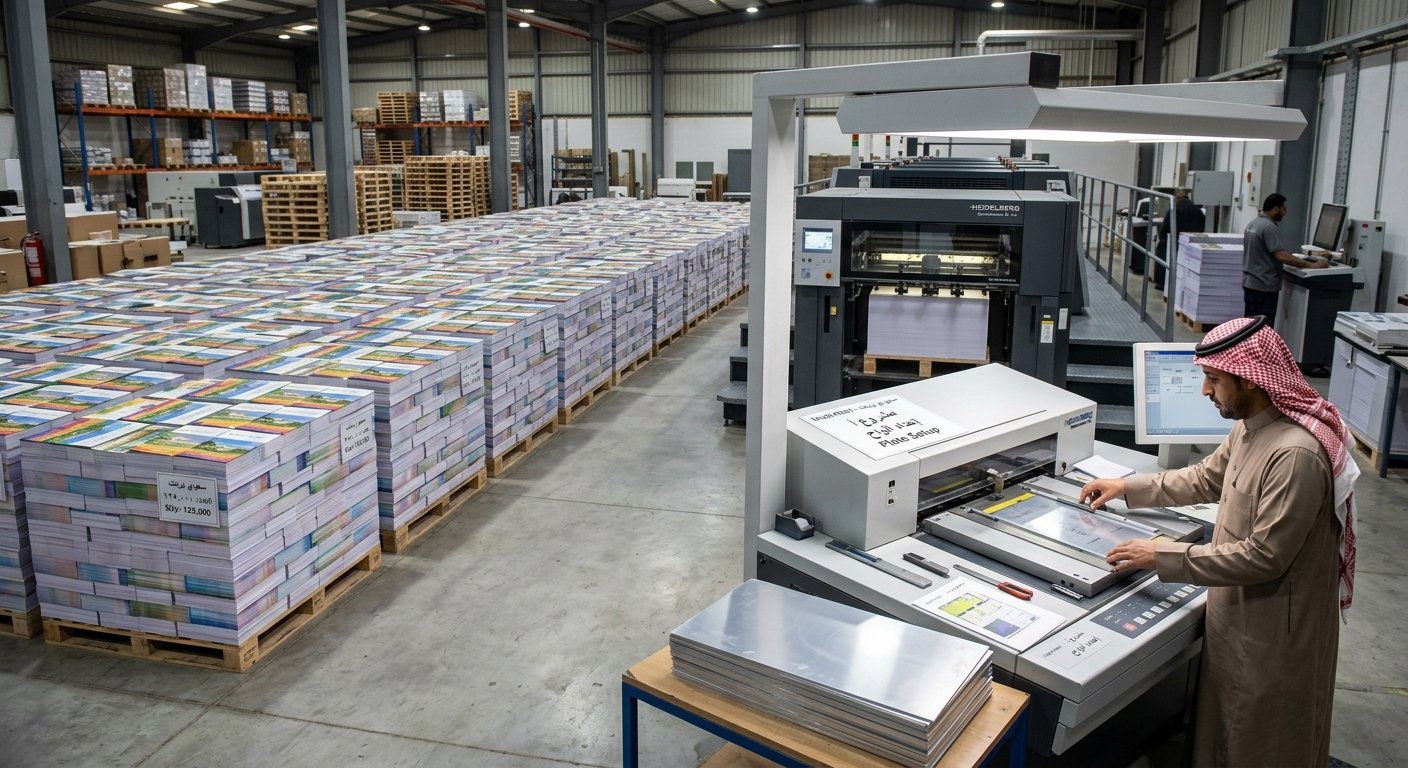
Offset requires plate setup before production begins, a fixed cost that stays the same whether you print 100 copies or 100,000. At low volumes, that setup cost makes offset more expensive per unit than digital. As volume increases, the per-unit cost drops steadily, and at scale it becomes significantly cheaper than digital for the same job.
Colour Accuracy
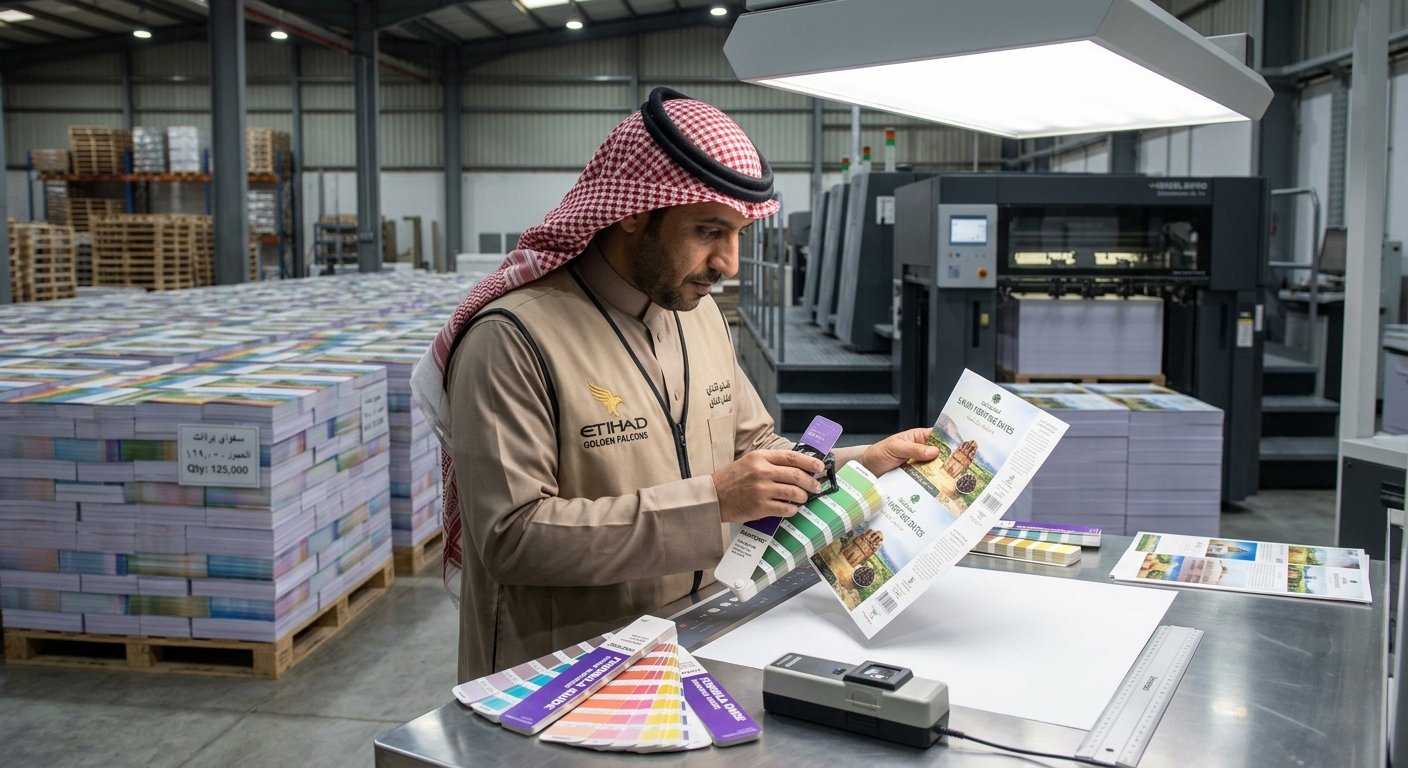
Brands with Pantone references or strict colour standards for packaging, stationery, or official materials rely on offset because spot colour systems deliver matching precision that CMYK digital output cannot consistently achieve. UV offset and 4-colour offset give the level of control that brand-sensitive applications need.
Material Quality
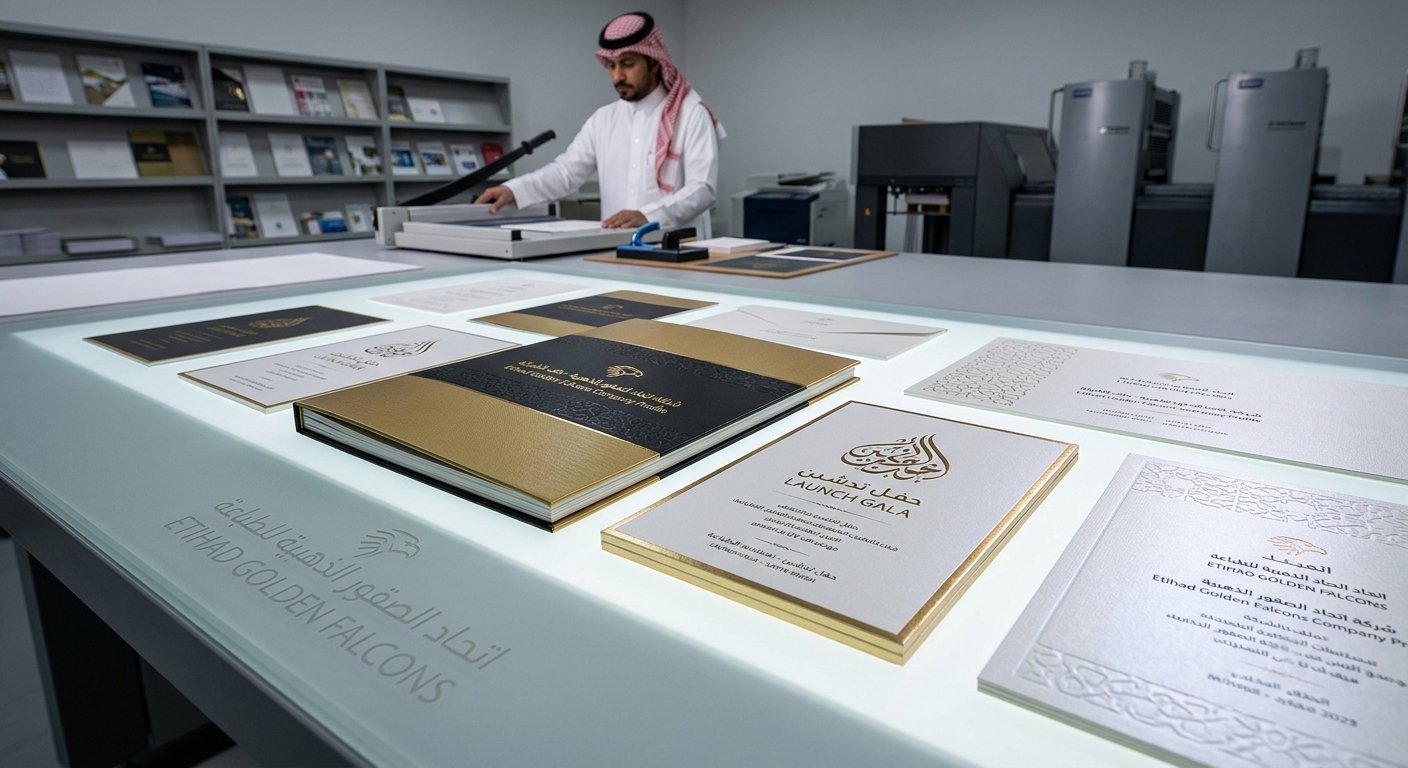
Offset allows more control over paper weight, coating, and finishing than digital. When the physical feel of the material matters, a premium company profile, a high-end invitation, packaging for a positioned product, offset gives more options and more consistency at scale.
How Businesses in Riyadh Use Offset Printing Services

Corporate and professional services use offset printing for company profiles, stationery sets, and formal correspondence materials that represent the organisation in client and institutional relationships. Consistency and material quality across these touchpoints is a direct reflection of how the organisation presents itself.
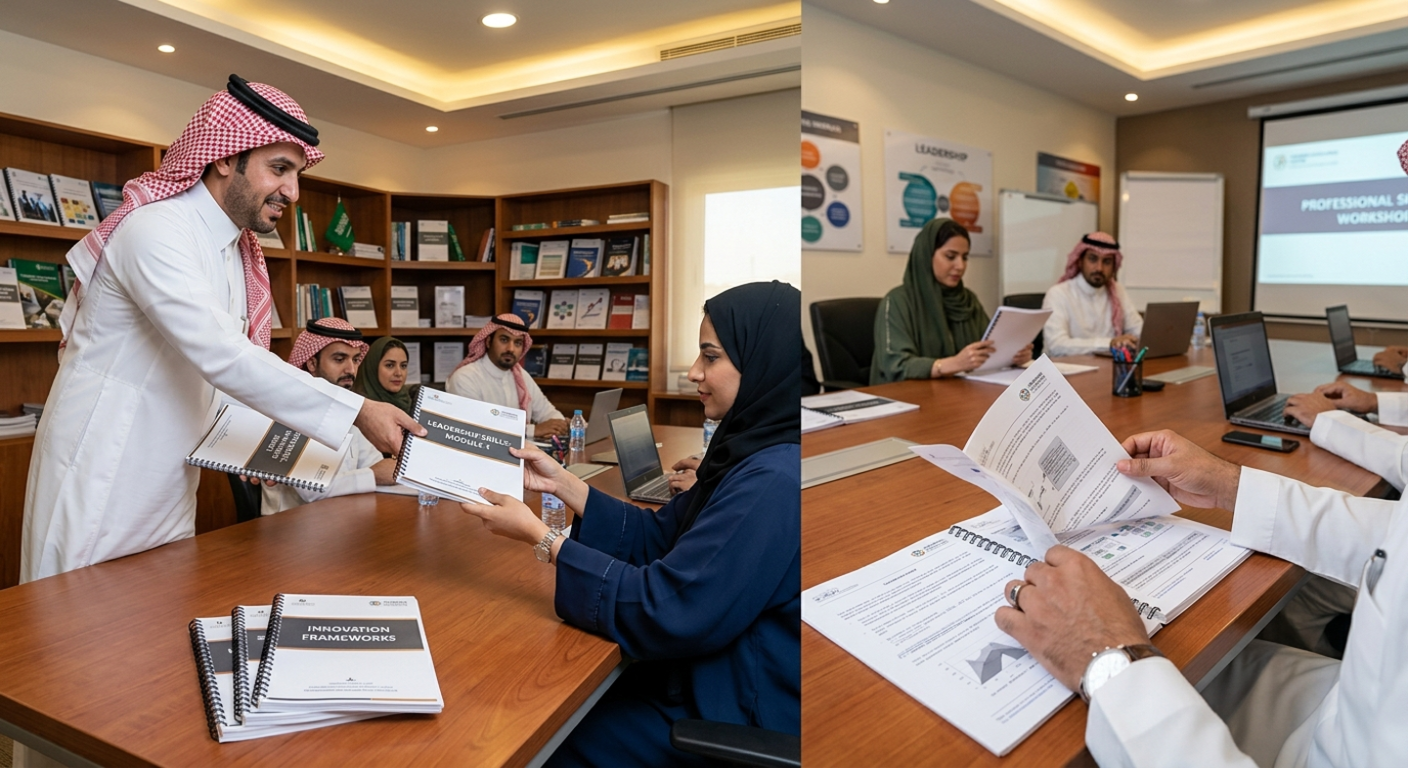
Publishing, education and training organisations rely on offset for structured multi-page content, books, training manuals, institutional publications, where readability, page alignment, and binding durability across large print runs determine whether the material is fit for purpose.
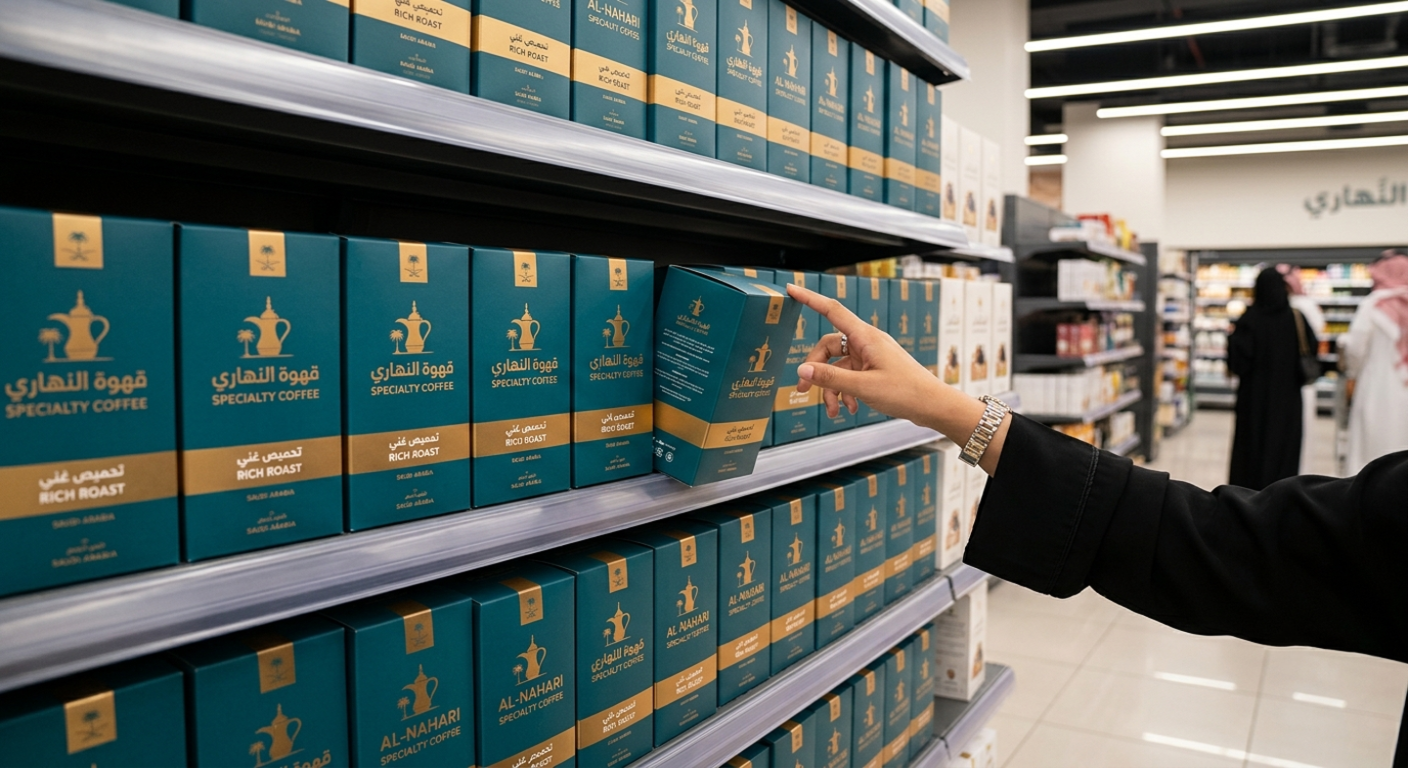
Retail and product businesses depend on offset for packaging printing that must maintain colour consistency across production batches. Retail shelf presence depends on visual uniformity, and offset is the only method that reliably delivers that uniformity at commercial production scale.

Government and large institutions use offset printing for official publications, flag printing, and high-volume campaign materials distributed across multiple locations simultaneously. At government distribution scale, offset is the economically and practically rational choice.
Offset covers the bulk, multi-page, and high-consistency side of printing well, but it isn’t built for everything a business needs. Large-format printing is another type of printing that businesses turn to when the job calls for oversized graphics, banners, or displays rather than high-volume page runs — the two methods solve different problems and often end up used side by side within the same project.
Choosing the Right Offset Print Specification
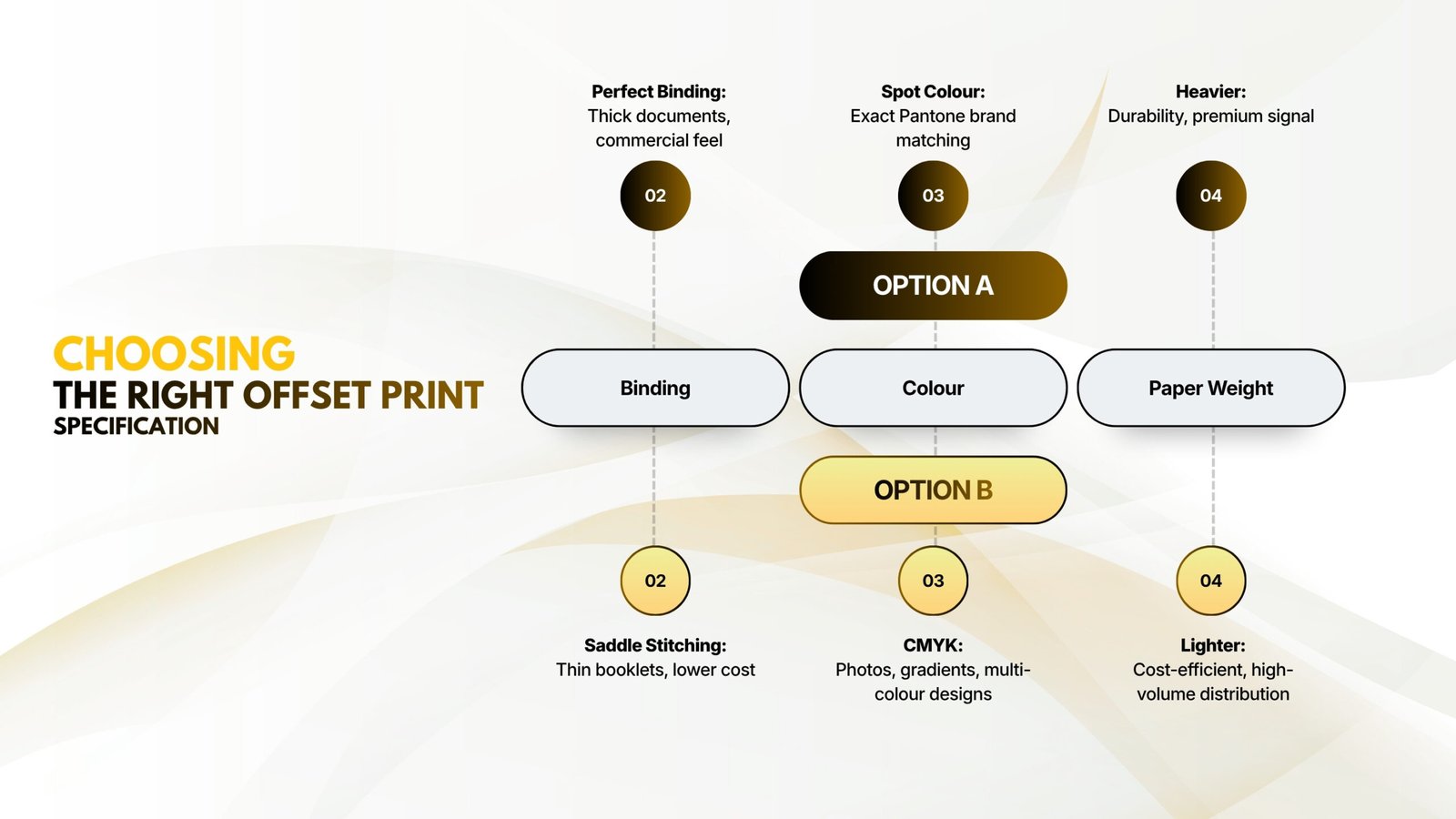
| Decision | Option A | Option B |
| Binding | Perfect Binding: thick documents, commercial feel | Saddle Stitching: thin booklets, lower cost |
| Colour | Spot Colour: exact Pantone brand matching | CMYK: photos, gradients, multi-colour designs |
| Paper Weight | Heavier: durability, premium signal | Lighter: cost-efficient, high-volume distribution |
Perfect binding vs. saddle stitching
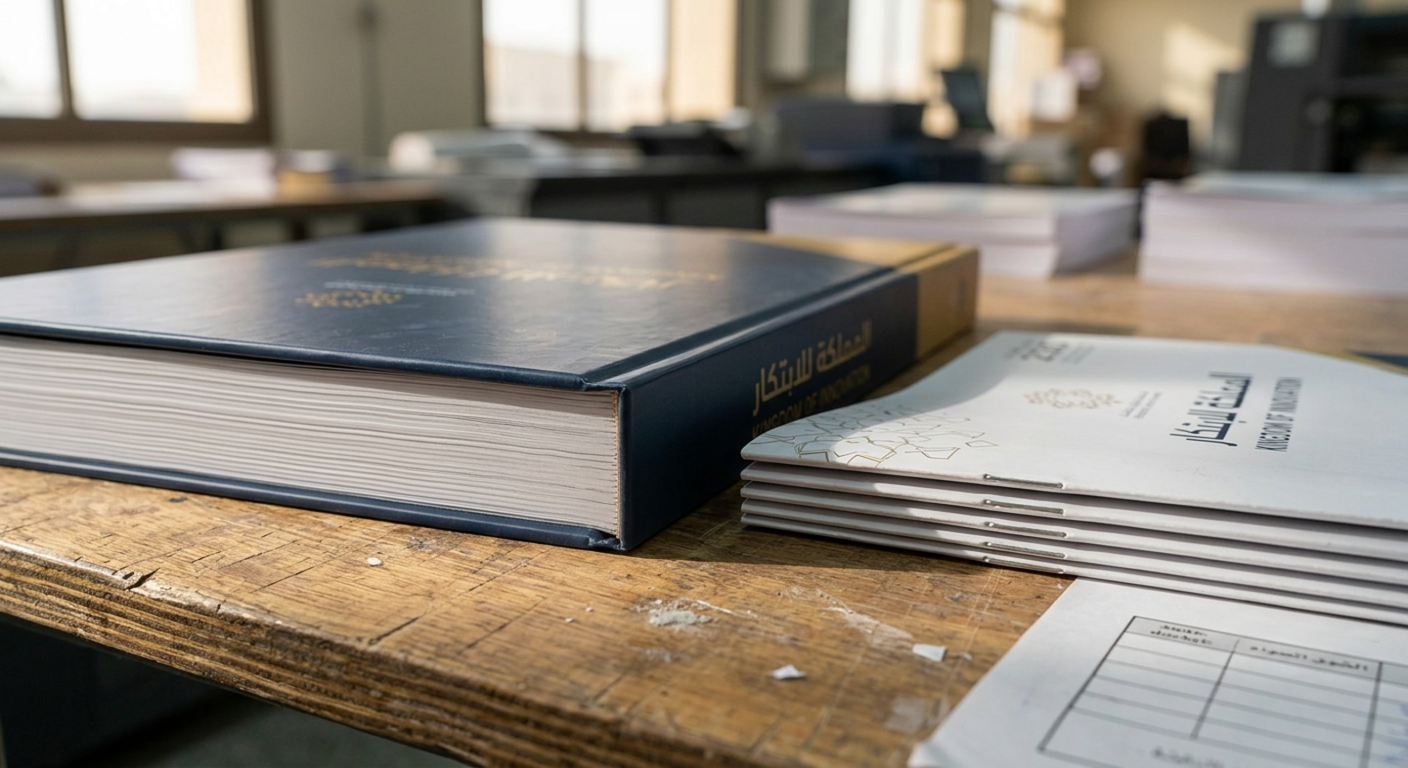
Perfect binding, where pages are glued to a flat spine, is used for thicker documents: company profiles, books, comprehensive training manuals. It produces a flat-spined format that looks and feels like a commercial publication.
Saddle stitching, staples through the fold, is used for thinner booklets and brochures where the page count does not justify the cost of perfect binding.
The decision is primarily about page count and intended use. A 200-page training manual in saddle stitch would not hold together under regular use. A 12-page brochure in perfect binding would look disproportionate.
Paper weight and stock
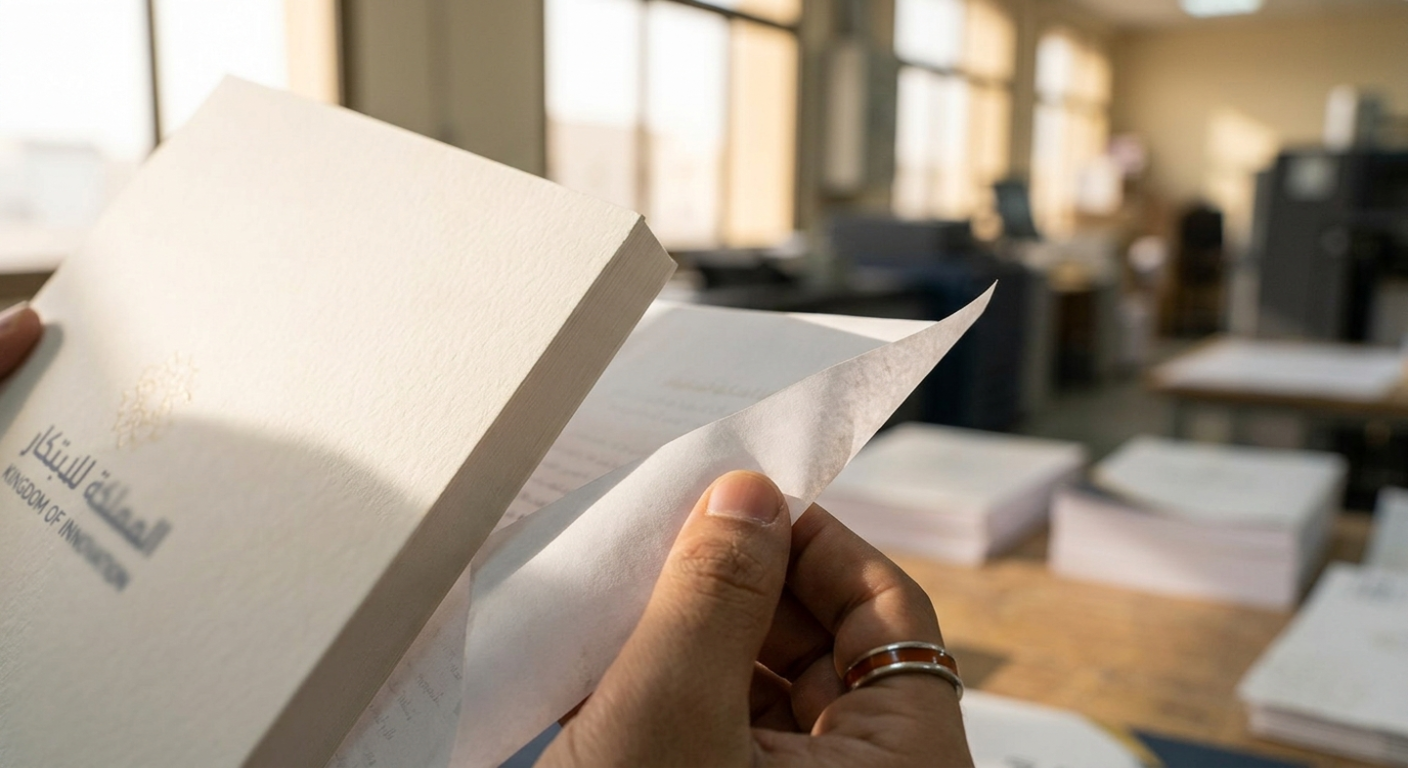
Heavier paper stock gives a more substantial feel, better durability, and a quality signal that lighter stock does not produce. Lighter stock is more flexible and cost-efficient for high-volume distribution where unit cost matters more than tactile premium.
The appropriate weight depends on both the function of the material and how it is intended to be received. A company profile handed to a senior client and a mass-distribution promotional leaflet have different requirements — and the paper weight should reflect that.
Spot colour vs. full CMYK
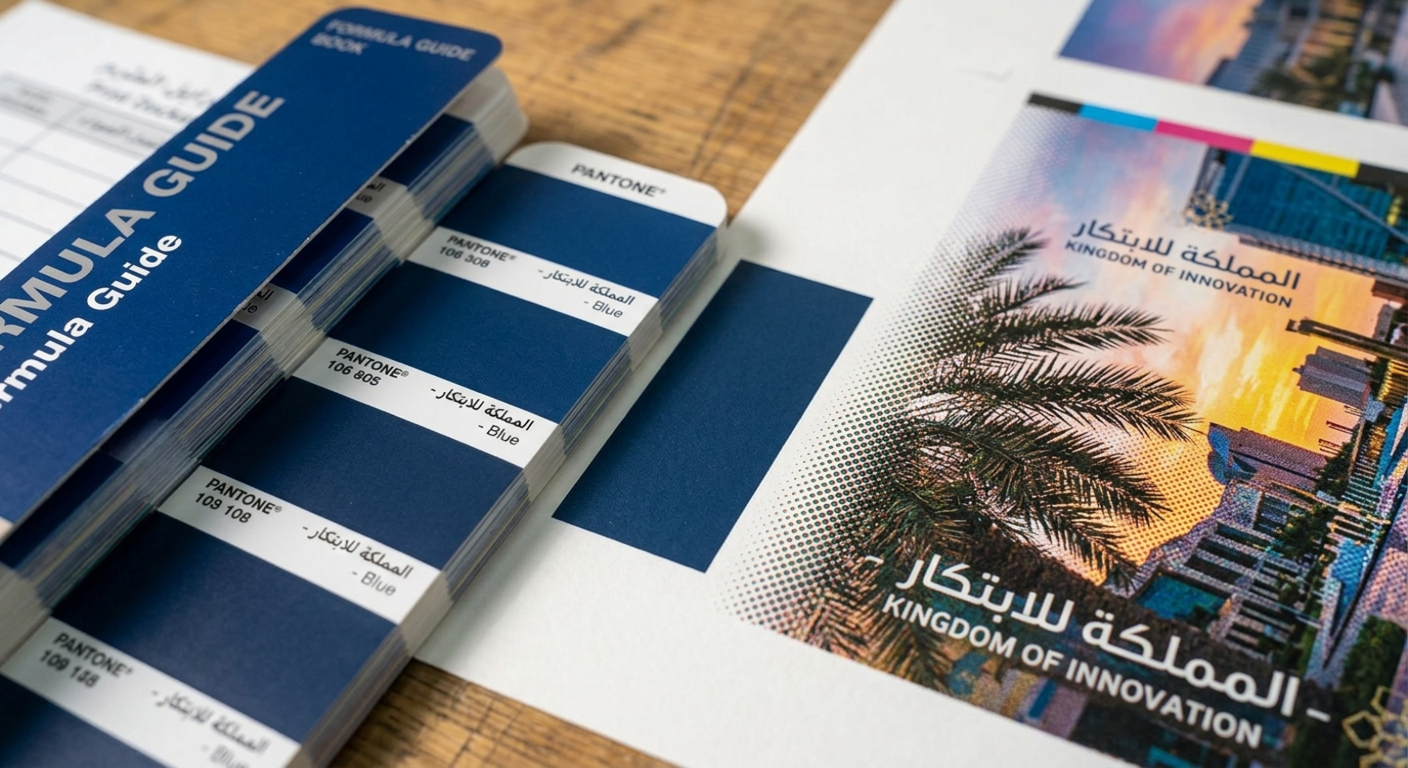
Spot colour is used for strict brand colour matching, where a specific Pantone reference needs to be reproduced precisely rather than approximated through CMYK mixing. This is the standard for corporate identity materials, branded packaging, and any application where colour accuracy against a fixed brand standard is a requirement.
CMYK is used for full image reproduction, photographs, complex gradients, and multi-colour designs where four-colour process output is the correct method. The decision between the two is driven by what the design contains and how precisely colour needs to match a defined standard.
What Does Offset Printing Actually Cost in Riyadh?
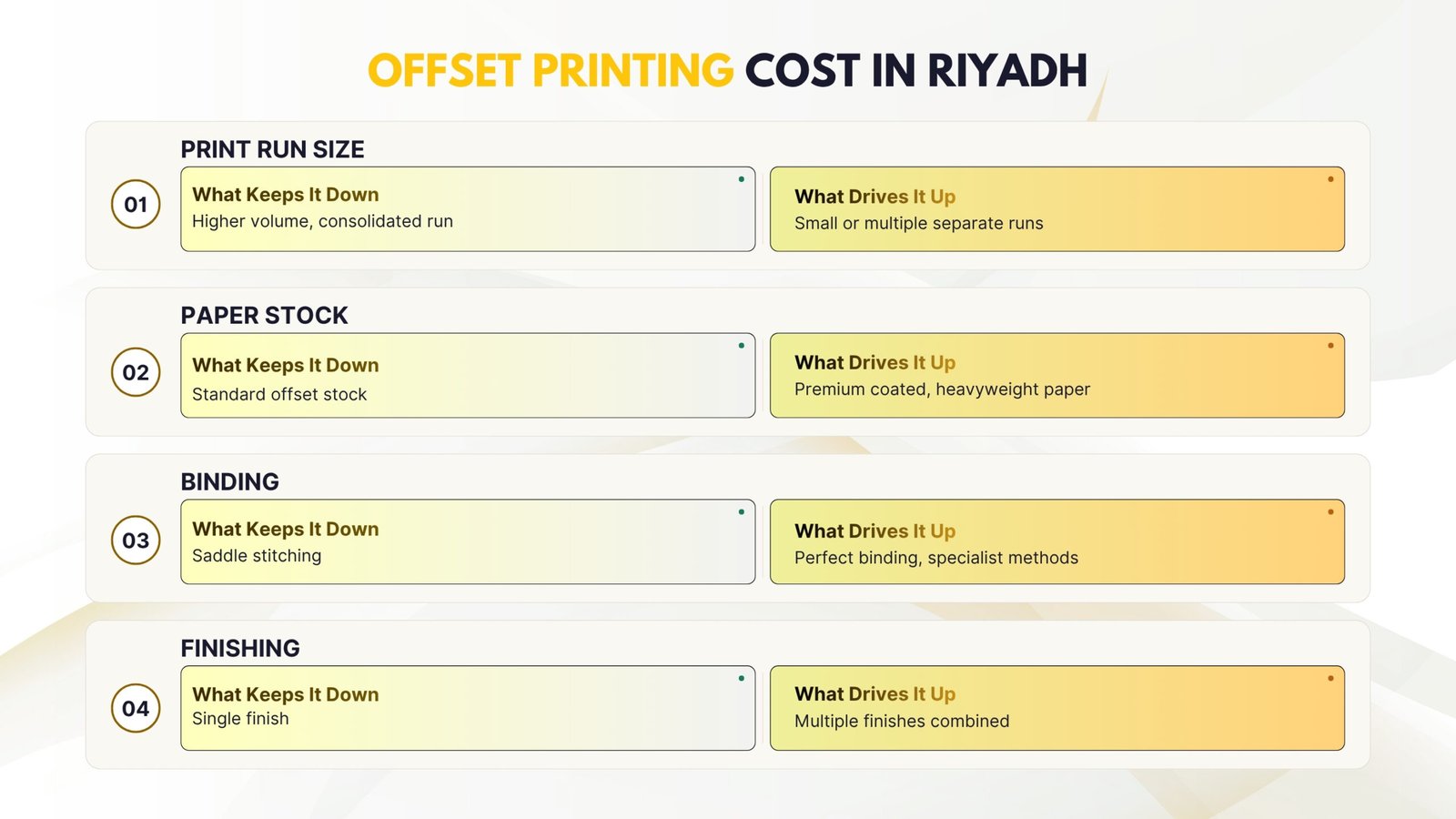
| Cost Driver | What Keeps It Down | What Drives It Up |
| Print Run Size | Higher volume, consolidated run | Small or multiple separate runs |
| Paper Stock | Standard offset stock | Premium coated, heavyweight paper |
| Binding | Saddle stitching | Perfect binding, specialist methods |
| Finishing | Single finish | Multiple finishes combined |
Cost is driven by four variables: print run size, paper stock, binding, and finishing.
Print Run Size
A higher volume, consolidated into a single run, keeps cost per unit down. Small runs or multiple separate runs drive it up, since every additional plate setup is a cost the previous run already paid for.
Paper Stock
Standard offset stock keeps cost down. Premium coated or heavyweight paper drives it up, along with production time.
Binding
Saddle stitching keeps cost down. Perfect binding and specialist methods drive it up, in proportion to how many production steps they add.
Finishing
A single finish keeps cost down. Combining multiple finishes, lamination, spot UV, embossing, foil, drives it up, since each one is a separate production step and the cost compounds.
Where businesses in Riyadh overspend is usually in one of two places: premium finishes on materials that get distributed in volume and discarded quickly, or small separate runs instead of one planned, consolidated production run.
What Should You Look for in an Offset Printing Company in Riyadh?
Press Quality and Colour Consistency
Ask to see output from comparable jobs, same paper type, similar run length. Consistency across thousands of copies is what offset is built for, and a capable provider should be able to demonstrate it.
In-House Finishing
Outsourced finishing introduces a dependency that affects both timeline reliability and quality control. Binding, lamination, and cutting done in the same facility as printing produce more consistent results than jobs routed between separate operations.
Pre-Press Support and File Checking
This is where a provider’s operational discipline shows. A provider that checks files and flags issues before going to plate saves you the cost of errors discovered after production. One that prints whatever arrives hands the problem back to you after the damage is done.
Common Mistakes to Avoid When Ordering Offset Printing in Riyadh
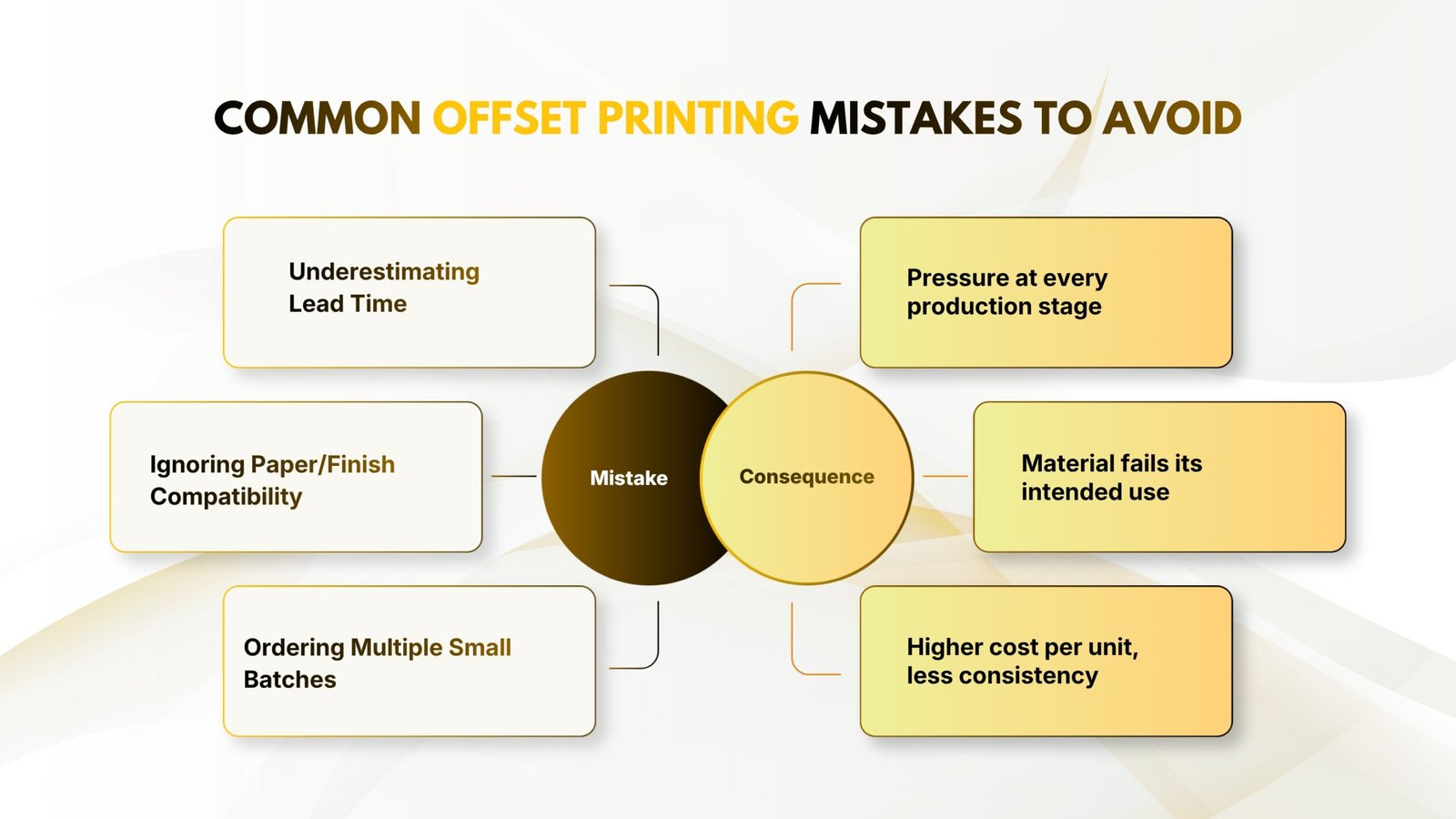
| Mistake | Consequence |
| Underestimating Lead Time | Pressure at every production stage |
| Ignoring Paper/Finish Compatibility | Material fails its intended use |
| Ordering Multiple Small Batches | Higher cost per unit, less consistency |
Quick Decision Guide: Which Offset Print Product Do You Need?
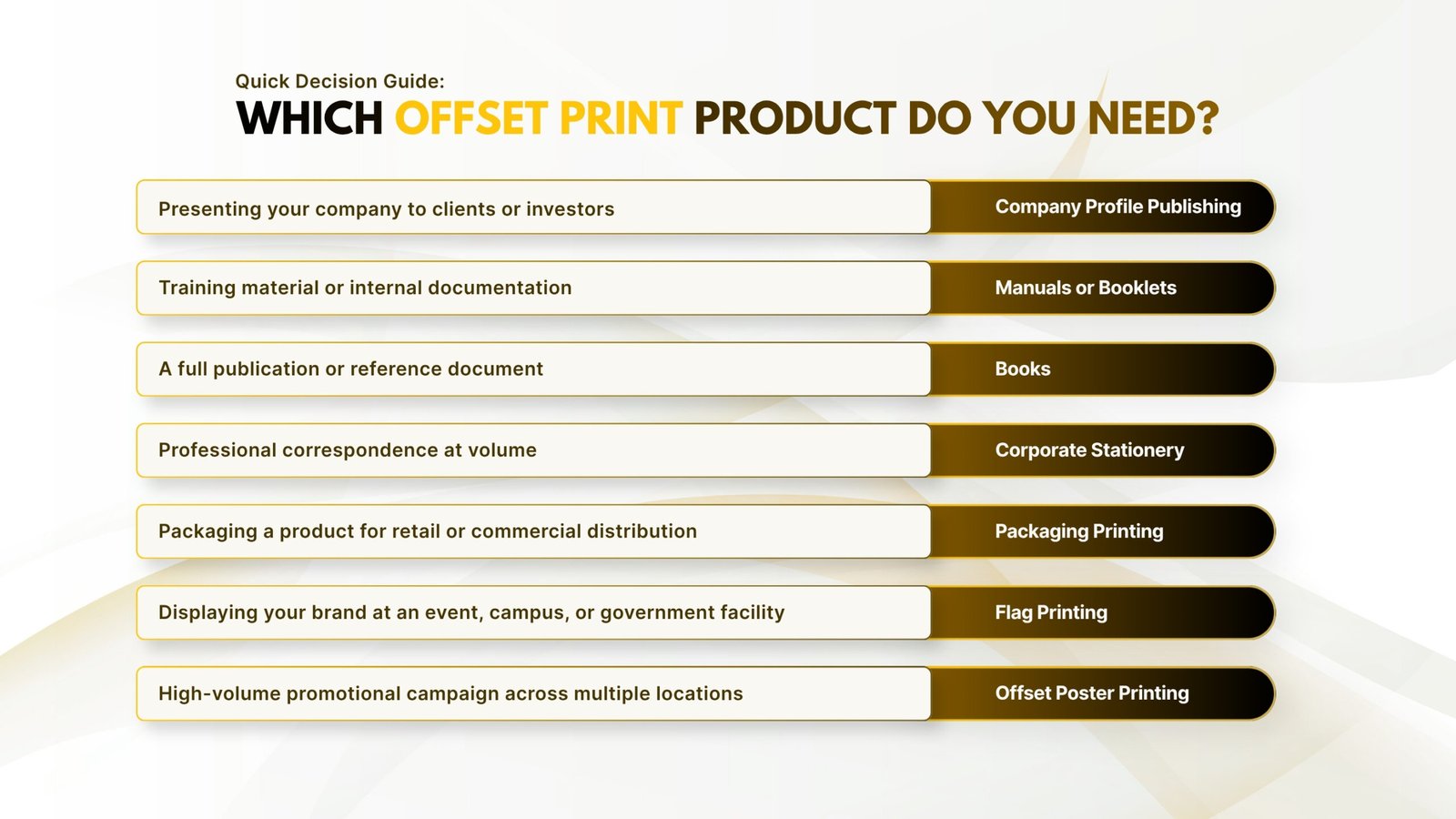
| Need | Product |
| Presenting your company to clients or investors | Company Profile Publishing |
| Training material or internal documentation | Manuals or Booklets |
| A full publication or reference document | Books |
| Professional correspondence at volume | Corporate Stationery |
| Packaging a product for retail or commercial distribution | Packaging Printing |
| Displaying your brand at an event, campus, or government facility | Flag Printing |
| High-volume promotional campaign across multiple locations | Offset Poster Printing |
How Does Etihad Golden Falcons Handle Offset Printing in Riyadh?
Offset printing gets treated as a production process here, not a one-off print request. That shows up in three places: how the process runs end to end, what gets produced, and why volume and material decide the approach before anything goes to plate. If you are new to commercial print, our printing services guide will explain why these decisions happen before ink ever touches a substrate.
A Controlled Process, Pre-Press to Delivery
Offset printing is run as a controlled production process from pre-press to finished delivery. File checks happen before plates are made, press calibration keeps colour consistent across the full run, and in-house finishing keeps binding, cutting, and lamination under the same quality control as the press work itself. For large corporate, institutional, and packaging print orders, that control across every stage is what makes output consistent at scale.
What We Produce
Stationery, company profiles, books, training manuals, packaging, and large-volume promotional materials for corporate and institutional clients across Riyadh. The starting point for every project is volume, material, and intended use, since those three variables determine what the correct production approach actually is. If you have a job ready or need help figuring out the right approach before committing, contact us on WhatsApp and share the details; we will come back with a clear recommendation and a quote.
FAQs
Offset printing becomes cost-efficient at higher volumes. Minimums vary by product type, but as a practical guide, offset typically becomes the economically rational choice over digital at around 500 to 1,000 units for standard formats. Below that threshold, digital printing usually offers better cost-per-unit for most job types.
Offset is the right choice for large-volume, colour-consistent production where per-unit cost and material quality are the priorities. Digital is the right choice for small quantities, fast turnaround, and variable data applications. The decision comes down to volume, timeline, and colour accuracy requirements.
Yes. Spot colour systems on offset presses allow precise Pantone colour matching. This is one of the primary reasons brand-sensitive applications — corporate identity, packaging, official stationery — use offset printing rather than digital.
Perfect binding and saddle stitching are the standard options. Perfect binding is used for thicker documents. Saddle stitching is used for shorter booklets and brochures. The correct method depends on page count and how the document will be used.
Yes. Packaging printing for retail boxes, commercial product packaging, and branded product presentation materials is part of our offset production scope.
Standard jobs run five to ten working days from confirmed, print-ready artwork depending on run size, paper specification, and finishing requirements. Complex bound publications and large packaging orders take longer. We confirm a realistic timeline before production begins so your planning is not built around an estimate.
Yes. Delivery is coordinated across Riyadh based on order volume, material type, and timeline requirements.